
Celebrating Black History - Stage Coach Mary
A Female Black Trailblazer
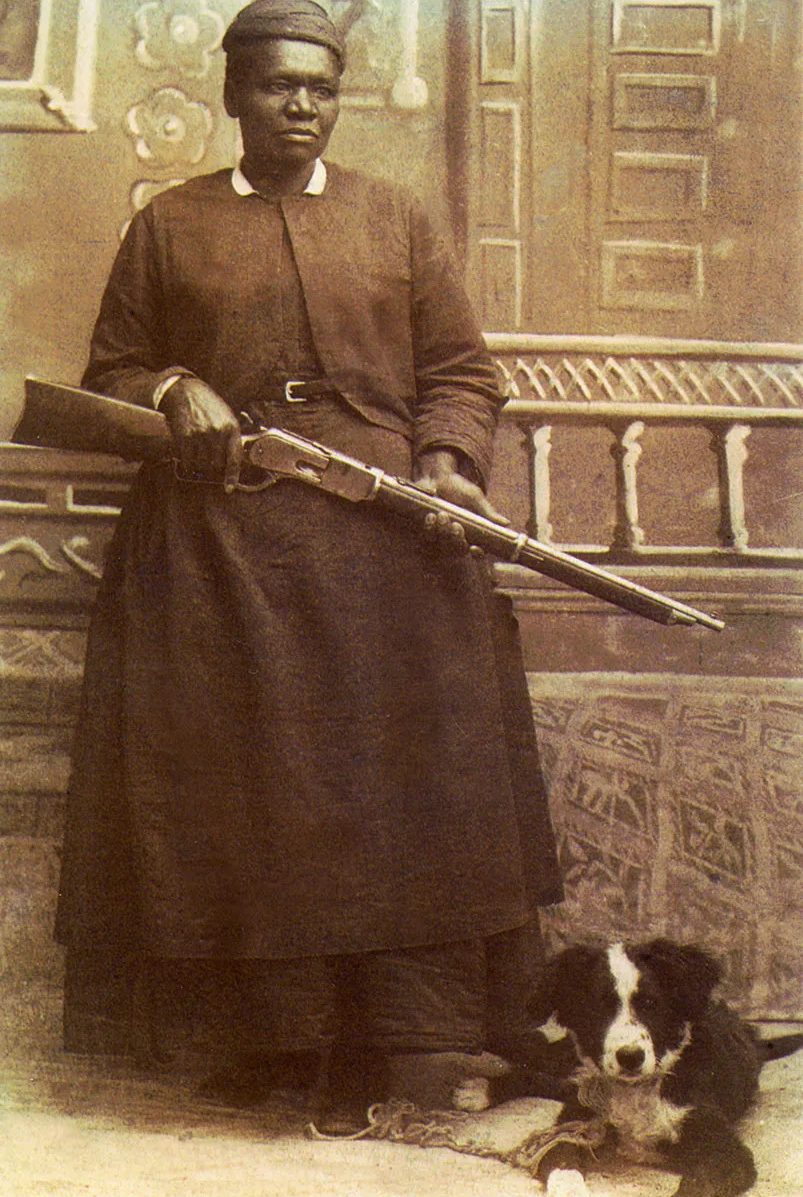
To celebrate Black History Month, one of our members sent in this blog about Stage Coach Mary.
I've always been fascinated by the American Wild West. But unlike many people, my fascination has never been with the cowboys and gunslingers portrayed in the films that were shown on Saturday afternoons when I was a child. For me, it has always been the story of Native American people and, above all, the injustice inflicted upon them.
That interest started with my mum, as so many things did. Growing up in the 1930s, while other children chose to write their school essays on subjects suggested by their teachers, Florence Nightingale, Alexander Fleming and the like, my mother went off script. She wrote about the injustices suffered by Native Americans.
I think that early influence stayed with me. Years later through that interest, I came across the extraordinary story of Mary Fields.
Mary was born in Tennessee around 1832 and, tragically, was born into slavery. The abolition of slavery eventually brought an end to that part of her life, and once free, Mary made her way west. To me, she is one of the most remarkable women of the American frontier. Known as ‘Stagecoach Mary’, she was a Black woman who simply refused to allow the expectations of her time to define what she could, or couldn't, do.
Stage Coach Mary
In 1895, when she was already in her sixties, Mary secured a contract as a Star Route mail carrier.
A Star Route carrier was essentially an independent contractor responsible for collecting and delivering mail between communities where there was no conventional postal service. Mary's route ran between Cascade and St Peter's Mission in Montana: a 34-mile round trip through some seriously unforgiving country.
There were no cars. No proper roads. Just a coach, horses and rough terrain to navigate. And Mary didn't merely deliver the mail. She protected it.
Carrying a rifle and revolver, she travelled through snow and remote country where wolves, bears, cougars and bandits were genuine hazards. When the snow became too deep for her horses, she strapped on snowshoes and carried the mail herself. According to the stories told about her, she never missed a day of delivery during her eight years on the route.
A woman with a reputation
Mary was certainly not what society might have expected a woman to be at the time. She smoked cigars. She drank whisky. She wore practical clothes rather than the elaborate dresses expected of women in the Victorian era. And she had a famously fiery temper.
One story from her time working as a forewoman at St Peter's Mission, tells of a man who took exception to receiving orders from a woman and, more particularly, from a Black woman who was being paid more than he was. An argument followed. Apparently, the man knocked Mary to the ground and reached for his weapon.
Mary drew her own pistol. A full-blown gunfight followed. Fortunately, no one was seriously hurt although the Bishop's laundry apparently wasn't quite so lucky. It was left riddled with bullet holes, described rather wonderfully as being ‘like a Swiss cheese’.
Mary also had a short fuse when it came to the convent lawns. She took great pride in cutting them and apparently wasn't impressed if anyone dared walk across the freshly mown grass. As one nun reportedly put it “May God help anyone who walks across the lawn after Mary’s cut it.”
A soft heart beneath the tough exterior
For all the stories about Mary's temper, she was also remembered as a remarkably kind and generous woman.
She was particularly fond of children and would regularly spend her meagre wages buying them peppermint sticks and fresh fruit. She also had a reputation for standing up for children when they were being bullied.
At one point, Mary briefly owned a restaurant. It didn't last. Not because the food wasn't good, but because Mary apparently couldn't bring herself to charge people for it. That perhaps tells us as much about her character as the stories about her gunfights do.
When Mary died, the people of the town came together to collect enough money to pay for a proper funeral. Later, they celebrated her life by holding a day of celebration on her birthday.
A woman ahead of her time
Having a fiery temper and smoking cigars may not make Mary Fields the most conventional role model.
But perhaps that's missing the point. Mary lived at a time when society was determined to tell people where they belonged, and particularly where Black women belonged. Racism and sexism sought to dictate the boundaries of her life. Mary simply ignored them.
She travelled where she pleased. She worked where she pleased. She wore what she pleased. She carried a gun, drove a mail coach, earned her own money and refused to accept that being a Black woman meant she should make herself smaller. Her story mattered then because she challenged those boundaries simply by living beyond them.
And it matters now because women like Mary remind us that history isn't only made by the famous, often white, men whose names fill our textbooks. Sometimes history is made by the women who simply refused to stay where society put them.
My First TUC Congress: Reflections from Brighton
By Jeni Reid PCS NEC Member
arlier this month, I had the opportunity to attend my first ever Trade Union Congress (TUC) in Brighton. Having attended many PCS conferences over the years, I wasn't quite sure what to expect, but I came away with a much broader understanding of the trade union movement and the challenges facing workers across a wide range of sectors.
One thing that struck me immediately was just how different TUC Congress is from PCS Conference.
If you're expecting the cut and thrust of debating motions from the conference floor, you'll be surprised. Congress is much more choreographed, reflecting its role as the collective voice of the trade union movement. Motions are agreed and composited in advance, speakers contribute on behalf of their unions, and debates are generally focused on demonstrating solidarity and presenting a united trade union position to the wider world. Most motions are passed overwhelmingly, often unanimously.
While it's a very different atmosphere, there is still plenty to admire. It was a pleasure to listen to so many well-crafted speeches delivered by confident and passionate trade union activists from across the movement. The breadth of experience and expertise on display was impressive.
It was also interesting to hear directly from two Labour Government ministers, Angela Rayner and Louise Haigh, both of whom addressed Congress and spoke about the government's priorities and relationship with the trade union movement.
PCS Presence
PCS had a strong presence throughout the event. Our General Secretary Fran Heathcote seemed to be everywhere, moving from one fringe meeting to another, ensuring PCS voices were heard across a range of important discussions. It was encouraging to see our union actively engaged both on the main Congress floor and in the many fringe events that took place alongside it.
One particular highlight was learning more about the Insource Now! campaign, which PCS is supporting alongside RMT and UNISON. The campaign is calling on the government to deliver on its commitment to bring public services back in-house. As a union that represents many outsourced workers and has recent success at insourcing jobs, it was good to see PCS continuing to champion insourcing as a key priority.
Away from the formal proceedings, one of the most memorable experiences was attending a screening of Iron Ladies on Brighton Pier. The film celebrates the remarkable women who supported and sustained their communities during the 1984-85 Miners' Strike. Their determination, resilience and solidarity were truly inspiring. If you have the chance to see the film at a local screening, I would highly recommend it.
Perhaps the biggest benefit of attending Congress was gaining a wider understanding of the issues facing other unions and their members. Whether it was hearing Equity speak about the growing threat posed by artificial intelligence to performers and creative workers, or listening to discussions on public sector funding, employment rights and workplace equality, many of the challenges felt familiar and closely connected to those faced by PCS members.
I returned home with plenty of reading material, a few free notebooks, and, more importantly, a much greater appreciation of the breadth and diversity of the trade union movement.
If you ever have the opportunity to attend TUC Congress, I would thoroughly recommend it. It's a unique chance to see the wider movement in action, learn from others, build connections, and gain a fresh perspective on the challenges and opportunities facing working people across the UK.
Why I Joined PCS Democrats and Why H&S Matters
By Terry Hunt
My name is Terry Hunt, and I am proud to be a member of PCS and part of PCS Democrats.
Like many PCS members, I joined the union because I believe that when we stand together, we have a stronger voice. A union is at its best when it listens to its members, represents their views, and works tirelessly to improve working lives. That is what attracted me to PCS Democrats. I share their commitment to democracy, accountability, transparency, and putting members first.
Throughout my working life, I have developed a strong passion for health, safety and welfare in the workplace. Every member deserves to come to work knowing that their wellbeing matters, their concerns will be listened to, and that they will return home safely at the end of the day.
Health and safety is about far more than policies and paperwork. It is about people. It is about supporting colleagues who may be struggling with workload pressures, stress, mental health challenges, workplace conditions, or other issues that affect their wellbeing. It is about creating a workplace where everyone feels respected, valued, and protected.
This is what drives me to take a leading role in health, safety and welfare within PCS. I want to be a voice for members, helping to ensure that concerns are raised, addressed, and never ignored. I believe that every member, regardless of their role, grade, or workplace, deserves strong representation and support when they need it most.
PCS Democrats share my belief that PCS should be a union that works for all members. We are strongest when we listen to each other, treat each other with respect, and focus on the issues that matter most to working people.
Whether you are a long-standing PCS member or someone looking to become more involved in your union, I encourage you to consider joining our community. We are committed to building a union that is democratic, member-led, and focused on delivering positive change; not listening to outside influences that have hidden agenda's.
Most importantly we are committed to listening to and supporting every PCS member.
Together, we can build safer workplaces, stronger representation, and a union that continues to put its members at the heart of everything it does.
Why I Joined PCS Democrats
By Tom Wise Public Sector Group Vice President & ONS Branch Chairperson
Joining the Office for National Statistics (ONS) in January 2022, straight after completing my studies, I knew from day one that joining PCS was the right decision. Trade unionism is fundamental to creating workplaces that are safe, fair and respectful, and I wanted to play my part in making that a reality.
After speaking with workplace reps, I was co-opted onto my branch committee in 2023. It opened the door to a whole new side of industrial relations, giving me the opportunity to support members while seeing first-hand the work that goes on behind the scenes to protect their rights. I quickly found my niche in Health and Safety. It was an area that genuinely interested me and one where I could use my analytical skills to identify practical improvements that would make our workplaces safer and better for everyone.
Since those early days, my role has grown considerably. While H&S remains a key area of interest, the natural turnover of reps through retirement and career changes has meant stepping into new responsibilities. I have led the development of a standardised casework triage system for my branch, taken up a seat on our Group Executive Committee (GEC), and supported new reps as they build their confidence and develop the skills needed to represent members effectively.
In 2026, I was fortunate enough to attend both the PCS Group Delegate Conference and Annual Delegate Conference (ADC). I had heard about the scale and significance of ADC, but I arrived with little understanding of the different factions within the union, what they stood for or the role they played. Being there changed that.
PCS is a large and diverse union. Branches, groups and individual members inevitably bring different experiences and perspectives, but our strength comes from finding common ground and working together in the interests of our members. During breaks and quieter moments at conference, I took the opportunity to speak with delegates from across the union. Those conversations were invaluable.
What particularly stood out to me were the delegates involved with the Democracy Alliance, and especially the PCS Democrats. Time and again, I found people whose focus was firmly on listening to members, understanding their priorities and ensuring those voices shaped the decisions being made. That resonated strongly with my own experience of working alongside outstanding Group representatives such as Paula Brown and Jeni Reid. They demonstrated that the best outcomes are achieved when members' interests remain at the heart of everything we do. It was about practical solutions and effective representation, not political point-scoring or outside agendas.
For me, that is one of the real strengths of PCS Democrats. They create opportunities to meet reps and activists you would never otherwise encounter, share experiences, debate ideas constructively and work together to tackle the issues facing members in our workplaces and beyond.
Another thing I came to appreciate at ADC was the value of building relationships between branches. Although we often work in different departments and locations, many of the challenges we face are remarkably similar. I left conference having met some fantastic people and become part of a wider network committed to ensuring that members' voices remain at the centre of every discussion and every decision. After all, they are the people we are elected to represent.
Getting involved in Democrats felt like a significant step, from being one activist in a single branch to becoming part of a wider community of reps who share the same values and commitment to member-led trade unionism. Speaking to PCS Democrats from across the union reinforced that belief. We all want a stronger PCS that is accountable to its members, driven by their priorities and independent of pressure from external political interests.
Some people argue that factions are inherently divisive. My experience has been very different. PCS Democrats provide a space for members and reps who share common values to come together, exchange ideas, support one another and strengthen our union. By keeping members' voices at the heart of everything we do, we can build a PCS that is more united, more effective and better equipped to deliver for the people we represent.